



The murals of Derry are among the most recognisable visual records of conflict memory in Ireland. Located primarily in the Bogside area, the People’s Gallery of Murals documents key events of the Troubles, including Bloody Sunday, and reflects the lived experiences of the local community. These murals are widely recognised as an important form of historical and political expression in Northern Ireland.
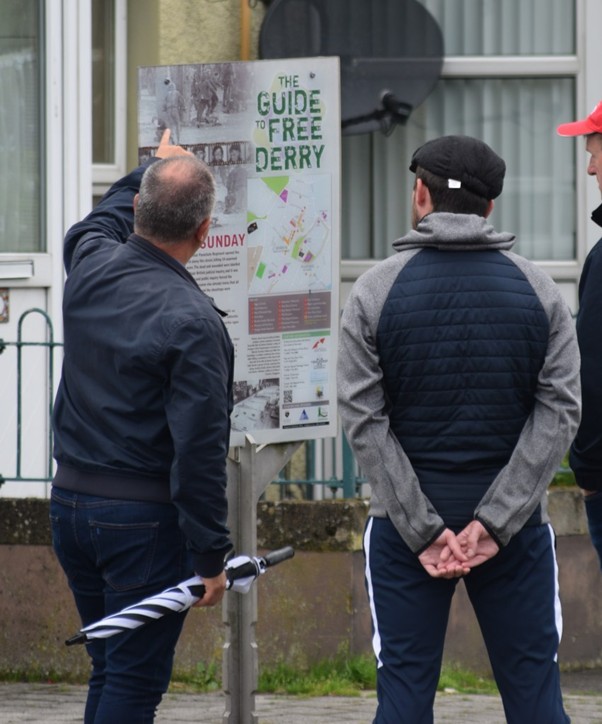
Today, the murals form part of a broader landscape of guided walking and cycling tours offered by community organisations, museums, and local guides. These tours help visitors understand the historical, political, and social context of the murals, rather than viewing them as isolated images. They are commonly used by schools, visitors, and educational groups as a way to explore Derry’s history in situ.
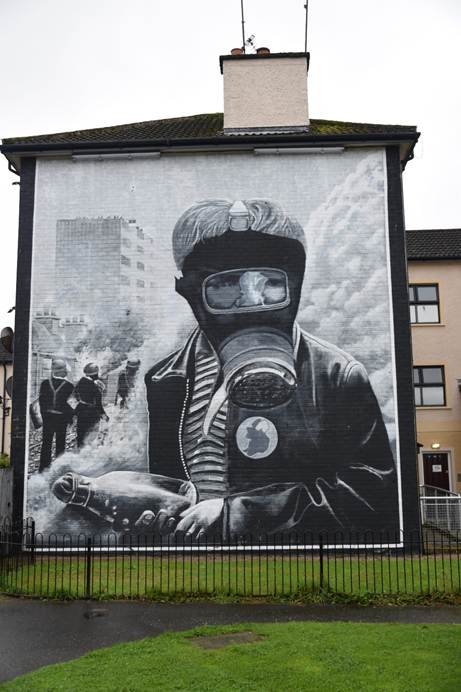
While most mural tours are led by experienced adult guides — often community historians or individuals with lived experience of the conflict — young people increasingly engage with these narratives through educational programmes, school visits, and youth-focused initiatives linked to museums and local organisations. In these settings, young people encounter contested histories, learn about the impact of division, and reflect on how peace has been built and maintained.
National and international media have highlighted the role of experiential tourism in Derry, including walking and cycling routes that pass through historically significant neighbourhoods. Coverage by outlets such as National Geographic has noted how place-based tourism helps visitors gain a deeper understanding of the city’s past and its transition from conflict to peace. These experiences do not simplify the Troubles, but instead emphasise context, complexity, and the long-term consequences of division.
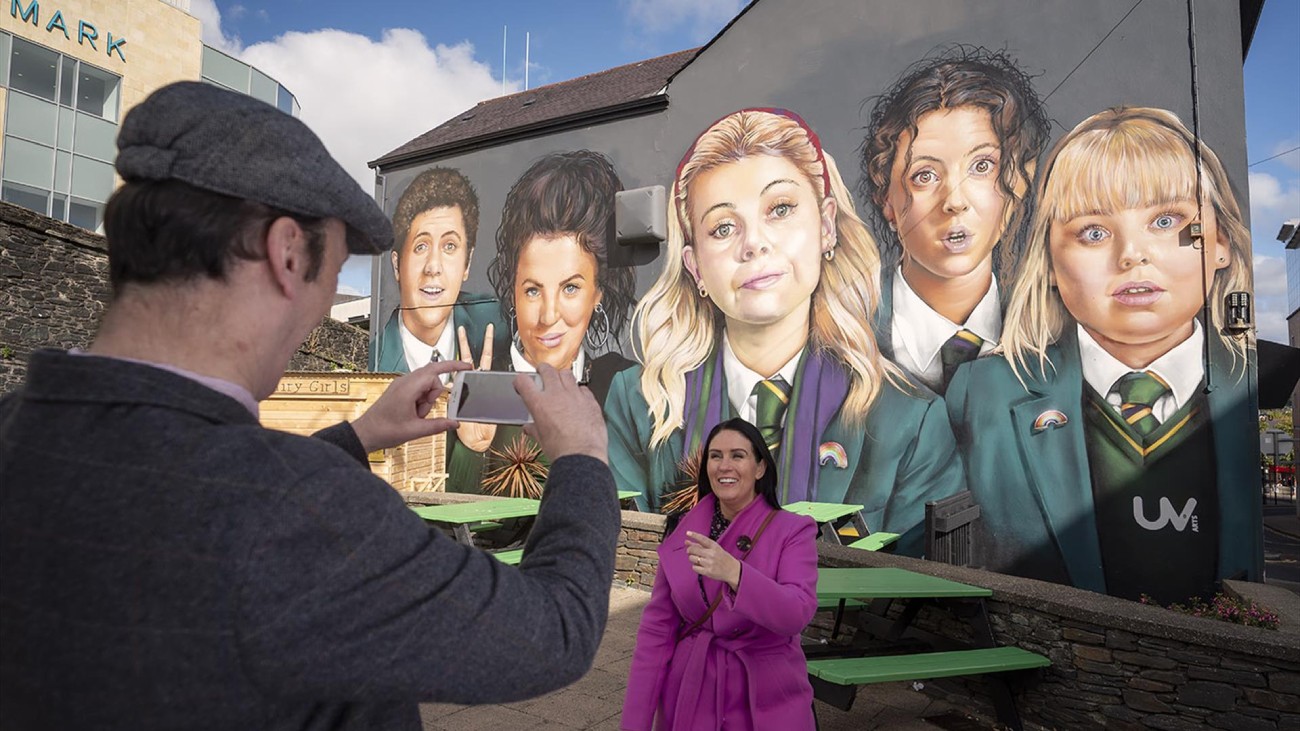
Local economic and social impact is visible. Visitors who engage with guided tours often move beyond the historic city walls into residential areas such as the Bogside, supporting local cafés, museums, and small businesses. For educators and youth workers, these tours are frequently described as emotionally challenging but valuable learning experiences, helping participants engage with difficult history in a structured and respectful way.
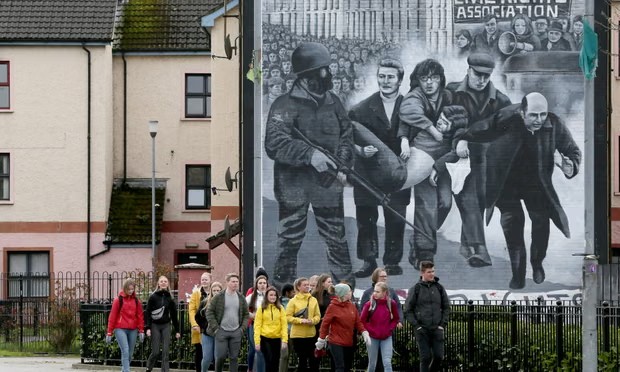
Voices from the Peacemakers Museum reinforce this perspective. Museum guides and educators consistently note that visitors are often drawn initially to stories of conflict, but leave with a stronger understanding of reconciliation, civic responsibility, and the importance of peace. As museum representatives have stated in interviews, presenting both conflict and peace narratives together is essential for meaningful understanding.
Derry’s murals illustrate a key challenge in post-conflict societies: how contested memories are shared, interpreted, and passed on to new generations. Murals were originally created to assert political identity and record injustice, often reflecting one community’s perspective. Over time, guided interpretation has helped situate these murals within broader historical narratives.
This case study matters because it shows that:
- Memory does not disappear after conflict
- Interpretation and education shape how memory is understood
- Place-based learning can support dialogue when handled carefully
Decades after the Good Friday Agreement, Northern Ireland continues to live with visible legacies of division, including peace walls, symbols, and ongoing political sensitivities. Research and policy analysis consistently describe Northern Ireland as post-conflict, but not post-division. Initiatives that help young people and visitors understand this complexity play a role in preventing polarisation and misunderstanding.
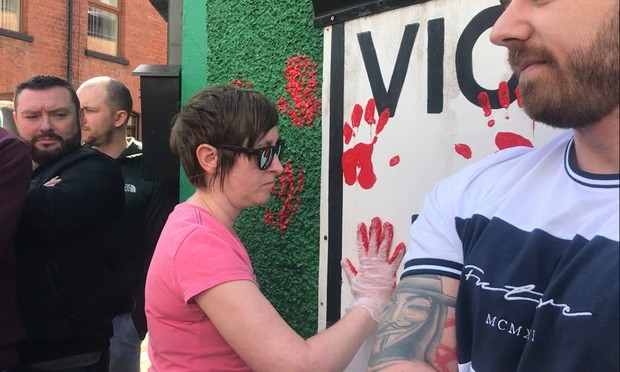
How This Connects to Paths to Peace
Paths to Peace (P2P) does not claim ownership of existing mural tours or peace initiatives in Derry. Instead, it draws learning from places like Derry to develop structured tools and frameworks that can support youth engagement with peacebuilding through tourism.
The Derry context illustrates several principles that underpin the P2P approach:
| P2P Focus Area | Learning from Derry |
| Conflict-sensitive tourism | The need for careful interpretation of contested history |
| Youth engagement | The importance of preparing young people to engage with complex narratives |
| Place-based learning | Using real locations to support understanding and reflection |
| Dialogue over slogans | Moving beyond simplified narratives of “us and them” |
Through the Global Peace Perspectives Roadmap, Paths to Peace captures insights from case studies like Derry to inform future youth-led initiatives across Europe. The project provides training resources, learning frameworks, and networking opportunities that can help youth organisations, educators, and tourism actors design peace-sensitive experiences in their own communities.
What This Means for Ireland Going Forward
Using the Paths to Peace framework, similar learning-focused initiatives could be developed or strengthened in Ireland by:
- Supporting youth engagement with contested heritage through non-formal education
- Linking tourism experiences to peace education outcomes
- Encouraging cross-community and cross-border learning
- Ensuring that difficult histories are approached responsibly and inclusively
Importantly, this is about application, not replacement. Existing tours, museums, and community initiatives retain ownership of their stories. Paths to Peace offers a way to support learning, reflection, and youth participation without simplifying or commercialising conflict.
Why This Matters Now
Ireland’s peace is often described as mature, but it remains vulnerable to polarisation, misinformation, and generational distance from lived experience. Young people who did not experience the Troubles directly still inherit its consequences.
By learning from places like Derry, Paths to Peace helps ensure that young people are not passive recipients of peace, but informed, responsible participants in maintaining it — using tourism and place-based learning as tools for understanding rather than division.
Written by:
Laura Magan,
European Projects Specialist in Tourism,
Momentum,
Ireland
Sources & References
CAIN Web Service (Ulster University)
https://cain.ulster.ac.uk/images/photos/derry_murals.htm
National Geographic – Derry murals & memory
https://www.nationalgeographic.com/travel/article/derry-northern-ireland-murals-history
The People’s Gallery, Rossville Street
https://www.visitderry.com/things-to-do/peoples-gallery-murals-p685651
Bloody Sunday Trust
https://www.bloodysundaytrust.org/
Bogside History Tours
https://bogsidehistorytours.com/
Free Derry Museum walking tours
https://freederrymuseum.com/tours/
Visit Derry – guided tours
https://www.visitderry.com/things-to-do/guided-tours
National Geographic – Exploring Derry by bike
https://www.nationalgeographic.com/travel/article/exploring-derry-by-bike-northern-ireland
Peacemakers Museum interviews
https://www.peacemakersmuseumderry.com/
Northern Ireland Executive – Peace Walls
https://www.executiveoffice-ni.gov.uk/articles/peace-walls
Glocality – youth & post-conflict identity
https://glocality.eu/northern-ireland-youth-post-conflict