



From Conflict to Connection: How the Peacemakers Museum (Derry, Ireland) is a Powerful Symbol of Peace and Hope
Ireland’s peace process is often described as a success story — but peace is not a finished product. It is a living process that must be actively protected, especially by younger generations who did not directly experience conflict but live with its legacy. This is where (P2P) and the Peacemakers Museum in Derry intersect powerfully.
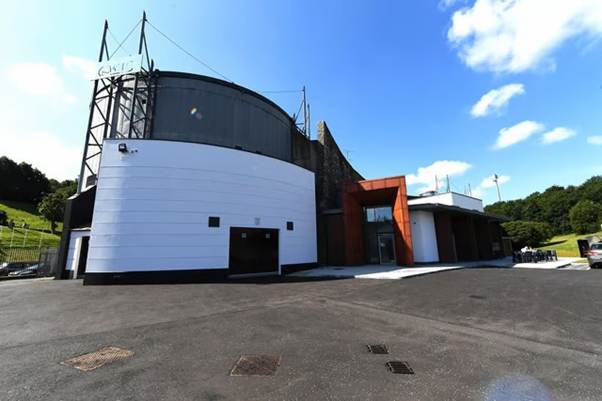
In the heart of Derry’s Bogside, a neighbourhood once defined by barricades and fighting, the Peacemakers Museum stands as a powerful symbol of hope. Housed in the redeveloped Gasyard Centre (on the site of a former British Army barracks), the museum was born in 1996 from a community dream not just to remember the Troubles, but to transform that memory into learning and dialogue. As one young guide, Sean Nealis, says of his work: “Our story can give people hope for a brighter future. I’ve met people from all corners of the world who compare it to their own struggles”. By sharing deeply local stories of conflict and reconciliation, Derry’s youth are inviting visitors to “feel” history and see peace as an active process. https://www.peacemakersmuseumderry.com/about/
Why This Case Study Matters to Maintain Future Peace in Ireland
The Peacemakers Museum was created to answer a crucial question: What happens after conflict ends? While many visitors to Derry focus on the Troubles, the museum intentionally shifts attention to reconciliation, dialogue, and civic responsibility.
The Peacemakers Museum addresses one of the most critical and often overlooked questions in post-conflict societies: what happens after conflict formally ends? While many visitors to Derry arrive seeking to understand the violence of the Troubles, the museum deliberately reframes the narrative towards reconciliation, dialogue, and shared civic responsibility.
‘Using tourism as a tool for continued peacebuilding, social cohesion, and youth empowerment’.
This shift is vital for Ireland today. Peace cannot be treated as a historical outcome or a political agreement alone — it must be actively understood, protected, and renewed by each generation. The Peacemakers Museum demonstrates that peace is not owned by institutions or governments, but by the communities and individuals who live with its legacy every day.
By using tourism as a tool for peacebuilding, social cohesion, and youth empowerment, the museum transforms visitors from passive observers into engaged participants. Through local storytelling, intergenerational dialogue, and youth-led interpretation, it shows how tourism can create spaces for reflection, empathy, and responsible citizenship.
For Ireland, this model offers a powerful lesson: sustainable peace requires continuous civic engagement, particularly from young people who did not directly experience conflict but inherit its consequences. Initiatives like the Peacemakers Museum ensure that peace remains a lived, shared practice — not a static chapter in history — and provide a replicable framework for maintaining peace through education, dialogue, and community-led tourism.
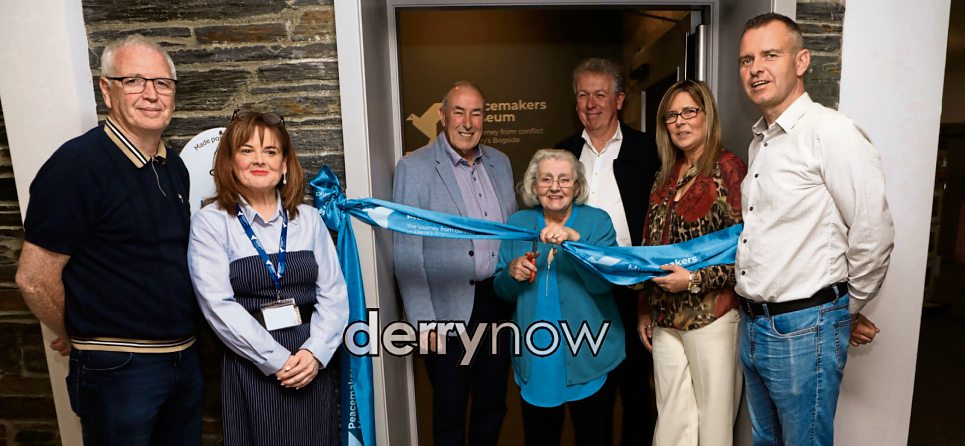
How the Peacemakers Museum & Youth Maintains Peace in Ireland
The museum’s youth guides — aged from early teens to retirees, from different community backgrounds — exemplify non-formal peace education in action, a cornerstone of the P2P methodology.
From the earliest planning stages, young people have been at the center of the museum’s mission. Community founders realised that ‘if visitors left the Free Derry Museum without hearing “what happened next,” there would be a gap in the story’ (Michael Cooper, Peacemakers Museum. The Peacemakers Museum fills that gap by focusing on “how we moved from conflict to the situation we are now — but always from the local perspective”.
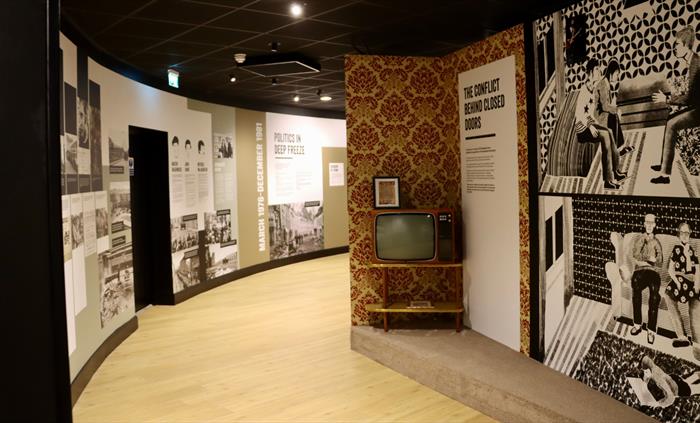
Inside, immersive exhibits and personal testimonies guide guests through the years 1972–2007, with over 50 residents of all ages (youth, women, elders, former activists) sharing their experiences. Importantly, youth serve as volunteer Peace Guides, leading tours and producing media projects (podcasts, short films) that capture themes of identity, coexistence, and resilience. This intergenerational approach gives Derry’s young people a real stake in healing: as one local teenager reflects, through the museum, “I feel like part of the solution — helping others see how far we’ve come and why it matters.” www.peacemakersmuseumderry.com
The museum not only educates, but ignites dialogue. Visitors often emerge describing the experience as “deeply human” and “emotionally transformative,” moved by the message that “reconciliation looks like when neighbours choose to rebuild trust”. One school teacher noted how the young guides spoke with such honesty that it “gave our students a real sense of how youth can be peacebuilders.” Yet the journey is complicated: as guide Michael Cooper warns, “Ninety percent of visitors are more interested in hearing about the conflict side than the peace — but you have to explain the peace too”. Tackling this means confronting hard truths, because “without an agreed narrative of why the conflict happened, reconciliation is incredibly difficult.” The museum’s team strives for a holistic approach: “We’re trying to do both – conflict and peace – in equal measure”.
For youth in Northern Ireland, the stakes of this work are high. Peace in Ireland remains fragile; deep divisions are still visible in peace walls, flags, and periodic tensions glocality.eu. Many young people feel underrepresented in formal peacebuilding, even as their informal actions and cross-community friendships carve out a new path glocality.eu. Initiatives like the Peacemakers Museum give them voice and agency. When asked why he joined the museum team, Sean notes he wanted to “engage in my own heritage and serve the community that shaped me”. In a society where youth often feel excluded by adults “protecting” them, Derry’s guides are choosing to speak up – and travel is their classroom.
This is exactly the vision of (P2P): empower young people across Europe to use tourism as a tool for peacebuilding. As P2P’s website explains, youth are being equipped “with the tools to promote peace through tourism, dialogue, and local action” pathstopeace.eu. Through training and mentoring, P2P will support initiatives like the Peacemakers Museum. Youth tour guides in Derry can share their techniques (storytelling workshops, conflict-sensitive tours, digital mapping) with peers elsewhere. In turn, P2P offers Irish youth digital toolkits, mentoring, and a network of young peacebuilders. Together, these efforts help ensure travel becomes “a direct act of peacebuilding”, not just sightseeing pathstopeace.eu.
Youth Carrying the Peace Movement into the Future: Young people can volunteer as guides, create new tours, or join P2P workshops to develop their own peace projects. By telling the story of Derry’s journey, the Peacemakers are inviting us all to ask, “What would you have done in this moment — and what can you do now to keep peace alive?”. In today’s Northern Ireland, it’s up to us – especially the next generation – to protect and build on the peace that was so hard-won. The Derry Peacemakers Museum shows one way: youth-led tourism and dialogue that transform history into hope. This is tourism with purpose, and youth leadership at its best.
The Peacemakers Museum Intersects all the P2P Objectives.
The Peacemakers Museum already practices what P2P formalises:
| Objective | Peacemakers Museum in Action |
| Youth-led peacebuilding | Young people trained as guides and facilitators |
| Tourism with purpose | Visitors engage in reflection, not passive consumption |
| Intercultural dialogue | Tours invite difficult conversations respectfully |
| Community-based learning | Stories are local, lived, and diverse |
| Sustainability of peace | Focus on “why peace must be protected” |
Ireland has included the Peacemakers Museum model in the P2P project by documenting, validating, and scaling it through its:
- The Global Peace Perspectives Roadmap
- Youth peace-tourism training workshops
- A European Peace Building Advocates Network
It has Defined Transferable Solutions for Ireland
Using P2P tools, similar initiatives could be developed in:
- Other European countries and border counties (Donegal, Monaghan, Louth)
- Urban areas with historical tension (Belfast, Dublin inner city)
- Rural communities experiencing social change or migration
Provides Great Examples of:
- Youth-led museum or heritage tours
- Peer-to-peer guide training using P2P toolkits
- Digital storytelling modules capturing local peace narratives
- Intergenerational dialogue sessions embedded into tourism offers
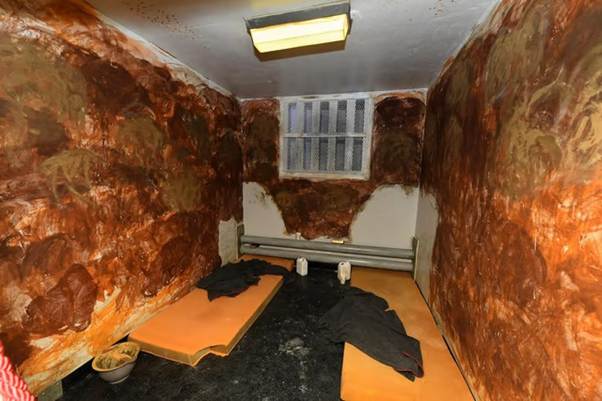
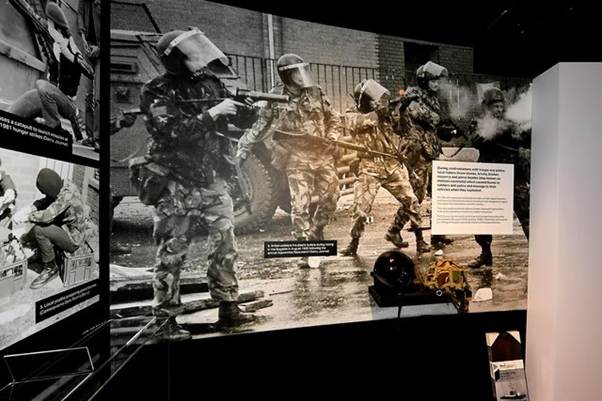
Hunger Strikers Cell, Cell Block H
Why the Peacemakers Museum Is Essential for Future Peacebuilding with Youth
What the Peacemakers Museum proves is this: peace tourism works when youth are trusted as storytellers. ensures these stories are not isolated — they become replicable, supported, and visible across Europe.
Written by:
Laura Magan,
European Projects Specialist in Tourism,
Momentum,
Ireland
Sources & References
- Peacemakers Museum Derry – About & Education
https://www.peacemakersmuseumderry.com/about/
https://www.peacemakersmuseumderry.com/education/ - Paths to Peace Project
https://pathstopeace.eu/ - CAIN Web Service – Northern Ireland Conflict & Peace
https://cain.ulster.ac.uk/ - Northern Ireland Executive – Peace Walls
https://www.executiveoffice-ni.gov.uk/articles/peace-walls